Friday, July 04, 2025

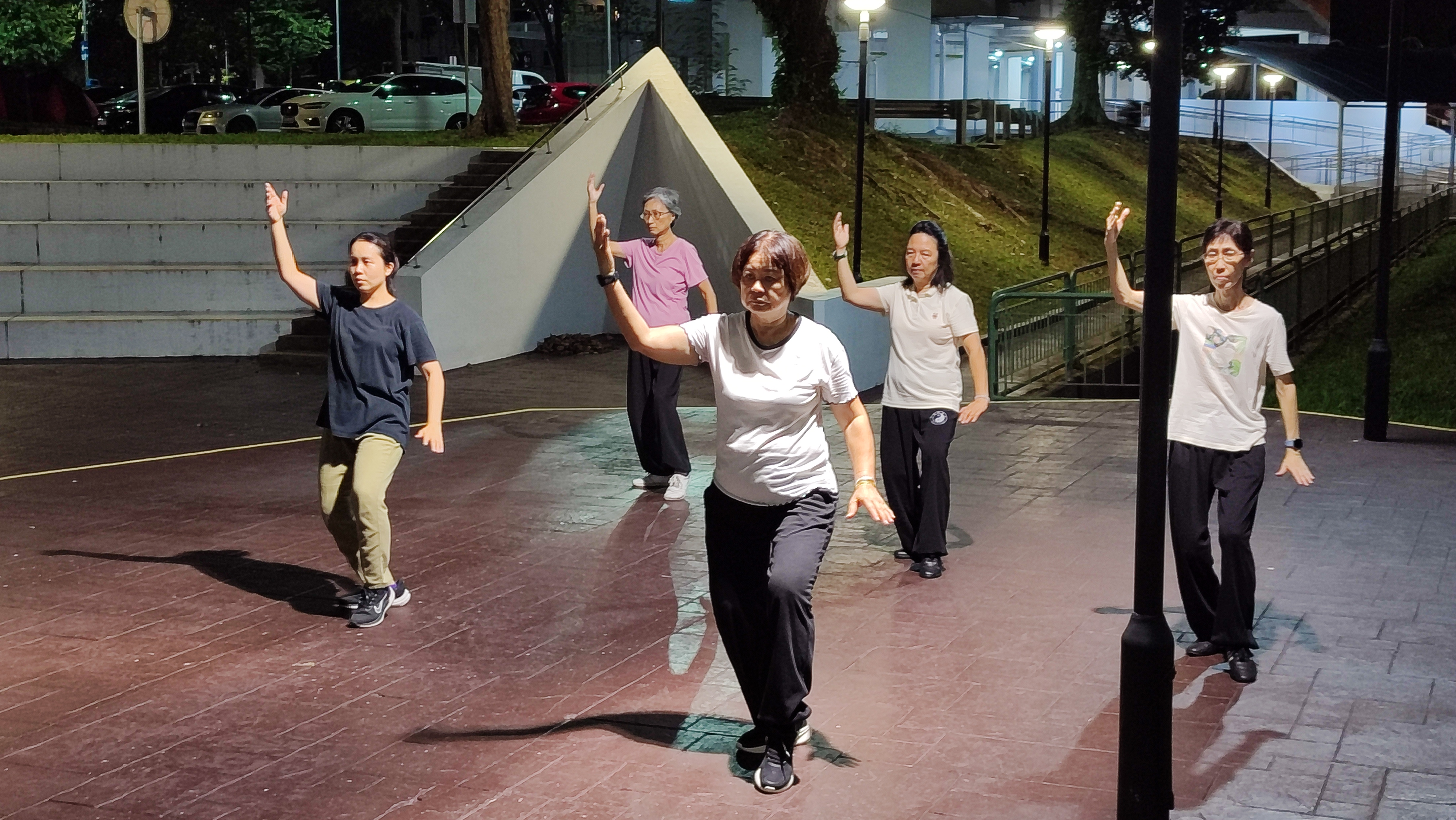
Tonight I decided to restart my blogging with the topic of Tai Chi. The reason being I've been practicing Tai Chi for the last 15 years and I have reaped the benefits in terms of good health, physically fit and better discipline.

For the benefit of the uninformed the practice of Tai Chi as we casually call it is an incorrect term. Tai Chi is a philosophy. The practice is call Tai Chi Chuan or in pinyin Taijiquan; translated into English "Tai Chi Fist/Boxing. It is named Taijiquan because it is based on Tai Chi philosophy which is rooted in ancient Chinese wisdom, particularly Taoism and Confucianism, emphasizing harmony, balance, and the interconnectedness of mind, body, and nature. It involves cultivating internal energy (Qi) through flowing, mindful movements to promote physical and mental well-being

Taoism and the Tao:

1.      Tai Chi philosophy is heavily influenced by Taoism, which centers on the concept of the "Tao," the fundamental principle of the universe.

The Tao is the natural order and flow of all things, and Tai Chi practice aims to align with this natural order.

Practitioners strive to live in harmony with the Tao, understanding and adapting to its ever-changing nature.

2.      Yin and Yang:

The concept of Yin and Yang, representing complementary and opposing forces, is central to Tai Chi.

Yin is associated with softness, passivity, and the earth, while Yang is associated with hardness, activity, and heaven.

Tai Chi movements are designed to balance these forces within the body and in relation to the environment.

The Tai Chi symbol, with its intertwined Yin and Yang, visually represents this balance and the dynamic interplay between opposites.

3.      Qi (Vital Energy):

Tai Chi practitioners believe in the existence of Qi, a vital energy that flows through the body.

Tai Chi movements and breathing techniques are designed to cultivate, balance, and circulate Qi, promoting health and vitality.

The goal is to remove blockages in the flow of Qi and ensure its harmonious movement throughout the body.

4.      Harmony and Balance:

Tai Chi emphasizes the importance of harmony and balance within the individual and in relation to the external world.

This balance extends to mental and physical well-being, as well as to relationships with others and the environment.

Through mindful movement and focused breathing, Tai Chi practitioners cultivate a sense of inner peace and equilibrium.

5.      Wu Wei (Effortless Action):

The Taoist concept of Wu Wei, often translated as "effortless action," is also relevant to Tai Chi.

It suggests acting naturally and spontaneously, without forced or contrived effort.

In Tai Chi, this translates to moving with fluidity and grace, allowing the body to move naturally without unnecessary tension.

6.      Application in Daily Life:

Tai Chi philosophy encourages a holistic approach to health and well-being, extending beyond the practice itself.

It emphasizes the importance of living in harmony with nature, cultivating inner peace, and promoting balance in all aspects of life.

By integrating Tai Chi principles into daily life, practitioners can strive for a more balanced, mindful, and harmonious existence.


Tai chi offers a wide range of benefits for people of all ages, making it a great activity to start at any point in life. Younger people can benefit from improved physical and athletic development, while older adults may experience reduced pain, improved balance, and a lower risk of falls. There's no specific age to start, as the gentle, low-impact movements make it adaptable for various fitness levels and physical abilities.

Benefits of Tai Chi:

Improved Balance and Reduced Fall Risk: Tai chi enhances balance and stability, making it particularly beneficial for seniors in preventing falls.

Pain Relief: Tai chi can help alleviate pain associated with conditions like arthritis and fibromyalgia.

Increased Strength and Flexibility: The flowing movements improve muscle strength and flexibility, contributing to overall fitness.

Reduced Stress and Anxiety: The mindful and meditative aspects of tai chi can help lower stress levels and improve mental well-being.

Improved Cardiovascular Health: Tai chi can be a mild-to-moderate aerobic activity, promoting heart health.

Better Sleep: Studies suggest tai chi can improve sleep quality and reduce fatigue.

Enhanced Cognitive Function: Tai chi may improve cognitive functions like memory and attention.

What age to Start:

Tai chi is safe and beneficial for people of all ages. It can be started at any age, and many people begin practicing after the age of 50. There is the perception that it for elderly folks. There is no upper or lower age limit, and it's a great activity to enjoy with family and friends. I would strongly recommend starting before the age of 50. From my personal experience many older folks get started in Taijiquan a bit late. Often after 60 when they start to have ache and pain in their joints. If you start before these signs begin to show, it prevent or slow down the age related degeneration. Whereas starting late in the hope of curing these ailments may not result in the full benefits.

In conclusion, Tai chi is a versatile exercise that offers physical, mental, and emotional benefits for people of all ages. It's never too late to start and experience the positive impact it can have on your well-being.


Check out my YouTube Channel on Tai Chi : [TAIJIQUAN SG] https://www.youtube.com/c/TaijiquanSG?sub_confirmation=1 #taichi #taijiquan #taijiforhealth

Wednesday, July 22, 2015

DOUBLE-YOLK EGG FOR LUNCH


Today had lunch at my favorite roast meat stall at this Commonwealth Crescent coffee shop. I ordered roast duck with an additional black sauce hard boiled egg.  I was pleasantly surprised to find a double-yolk egg in it. I vaguely remember the last time I came across a double yolk egg was when I was a kid; when mum came across one while preparing our meals. It's like an old friend, "long time no see" haha.

I am not sure if it is a Chinese superstition but we often hear eating double-yolk egg or twin bananas will make women fertile or bear twins. Some suggest good luck. A search on the internet confirm these superstition exist. However in some parts of Britian it is considered a bad omen. Chinese tend to look with favour anything that comes in pair. It's like you get double positives, in goodness, in luck, in happiness etc. A good example is the "double happiness" sign put up during a traditional Chinese wedding. So I'd like to think something doubly positive is coming my way.


From my Vblog :


Wednesday, June 06, 2012

Photos of Cesar Millan, The Dog Whisperer's seminar

Audience Streaming in.
Just before the start.


After the show.


For real world training for your puppy or problem dog check out my training courses :
https://petzcentral.com/services/courses/ 


Sunday, June 03, 2012

Cesar Millan LIVE in Singapore Seminar

I am looking forward to meet the world renown Mexican-born American dog trainer Cesar Millan, The Dog Whisperer tomorrow night. Cesar will be in Singapore this weekend 2 & 3 June at Marina Bay Sands to deliver his LIVE Seminar. I booked my seat online on 5th May 2012.

The reason I am attending the seminar not so much to learn about dog training but more to meet the guy and learn the way he conducts his seminar. I am familiar and very much agree with his training philosophy, that dogs require strong 'pack leadership' from their owners, in the form of exercise, discipline and affection (in that order). "Calm assertive" is also what I preach. Cesar is widely known for using his trademark verbal cue a tsch sounds. It's funny because in the last few years I've had clients making the tsch sounds in my presence and the dog totally ignores the owner. I've had to explain to them the tsch sounds isn't some kind of magic word or cue. Many of us would use words such "NO!" or "AHH AHH" (my preference). On it's own, words have no meaning to the dog. You have to follow through with a correction at a level that would deter the dog. In time the dog forms an association of the verbal cue with the unpleasant consequence and he learns to refrain from the negative behavior when the cue is given.


http://www.facebook.com/petzcentralsg

Saturday, March 31, 2012

Pet Projects

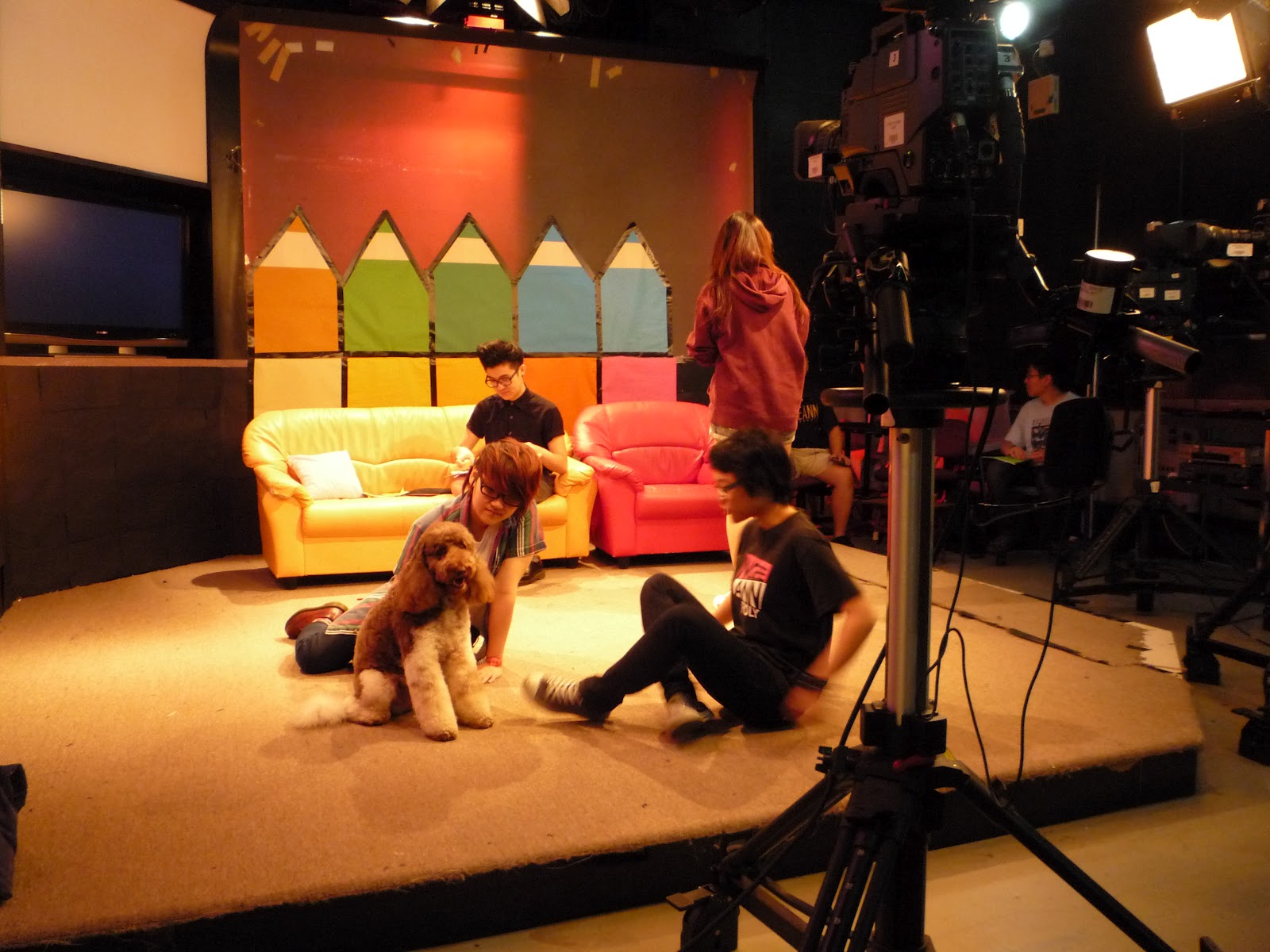
Okay, just in case you are wondering why I haven't blogged since November last year - first, the Christmas festivities in December and then Chinese New Year in January. The usual parties, meeting up with friends and Chinese New Year visits. After that I undertook a number of Doggie Projects - A Pet Care Talk at NUSS, a "How to Train Your Dog" TV program by Ngee Ann Poly's  Mass Communication students and earlier this month shooting an episode of "Xiaxue's Guide To Life" on Dog Training. These have kept me really busy.

NUSS workshop
The Pet Talk at NUSS was a bit of a challenge, mainly because they don't allow dogs on their clubhouse. I mean how are you going to interest your audience without a dog? It can potentially be boring. And then I did my presentation with Powerpoint for the first time where in the past I have given talks mostly utilizing whiteboard and transparencies. You see, a lot of my IT knowledge are self taught. Fortunately I found someone, a poly graduate who is an animal lover and passionate about animal behavior to help me with the Powerpoint Slides as well as take care of running it during my talk. In the absence of a dog, I decided to play the part of a dog for the purpose of demonstration and audience participation.

Everything worked out fine. I also managed to secure sponsorship of goodie bags from Royal Canin - dog products, food, treat, toy and souvenir. Participants were very happy as the free gifts were worth more than the fee they paid for the talk. Registration exceeded the targeted 20. Everybody had a good laugh with me acting as a canine for participants to practice training on. The talk ended right on time.


Ngee Ann Polytechnic TV project - Alpha Dog
For this project I brought along Rolo, a parti color labradoodle. Rolo is a really people-friendly dog, not overly attention seeking. Students of Mass Communication are involved in the different aspect of TV production - Producer, Floor Manager, Cameraman, Host, Control Room and Post Production. They all adored him. The most difficult role must be that of the host. She was a bit nervous and had difficulty remembering her lines. Slides show :
https://youtu.be/-cxiGDwhxYA


Xiaxue's Guide To Life (http://clicknetwork.tv/guidetolife
Early this month I did a video shoot with Wendy Cheng, Singapore Blogger Queen better known by her pseudonym Xiaxue, a celebrity blogger who posts about her life, fashion and local issues. Her blog, which attracts about 50,000 readers per day, has won prestigious blog awards and earned her sponsorship deals, as well as stints as a columnist and TV show host. However, she is a contentious figure in the Singaporean blogosphere, with some of her offensive posts sparking national controversies.

Shooting an episode of  "Xiaxue's Guide To Life" at the Singapore Botanic Gardens. "Xiaxue's Guide To Life" is an online tv program of Clicknetwork.tv which is owned by TV celebrity Irene Ang. It was supposed to be titled The Dog Whisperer. In this episode Wendy (Xiaxue) learns how to train a dog and teaches some simple tricks. I am very comfortable in front of a camera but I wasn't sure what it would be like working with Wendy. I have a certain impression of Wendy having read some of her blog posts. I must say I don't approve of her frequent use of the "fxxx" word and her overly cosmetic look but that doesn't mean I condemn her. It's just the way I feel and I don't pass judgement. It was a pleasant meeting I must say and she wasn't crude like I thought she would be and with no airs. Best of all, no "f" word was uttered!


Is your dog driving your nuts? Dog problems - Aggression, Barking Incessantly, Begging, Biting/Mouthing, Chasing, Chewing, Digging, Hyperactive, Jumping on People, Pee & Poo all over the place, Pulling while Walking, Separation Anxiety, Submissive Urination, Whining. I can help you. http://www.petzcentral.com Email me for time schedule.


Monday, November 21, 2011

More ways to "Chope"

 
Recently, there has been much discussion and debate about the uniquely Singaporean behavior of "chopping" seats at Food Court and Hawker Centres. "Chope" is a term used in Singapore to mean seat is taken, It is a simple, unwritten rule. Simple because you simply place a packet of tissue paper on the seat you want to reserve. I must say I've never done that myself. Ddoes that make me less Singaporean, I wonder? Whenever a discussion is generated in Forums you get lots people expressing unhappiness about such encounter. I am of the view that the people who does that isn't selfish even if they appear to be so. I mean we all know how crowded the popular Food Courts are during peak hours, especially at lunch time. Now if you don't do the "Chope" thing before you buy your food you'd be walking around or standing carrying your food tray for awhile. So this is an invention out of necessity. Nothing to be ashamed of. 

"Chope" is also used in the context of reserving something or booking the services of someone. One thing for sure is that when demand is more than supply the "kiasu" Singaporean is likely to "Chope"!

Here is a funny video of a victim of "Choppin". No not in Singapore but a foreign country USA. Maybe some of us can learn a thing or two here. Enjoy!

Headache - Finding a Seat

Definition of “chope”

Friday, November 04, 2011

Home cooked Teochew Muay (rice porridge) lunch

Last Sunday we were invited by my elder sister to a home-cooked Teochew Muay (porridge) lunch at her place. What made her decide to host such an event was a call I made to her one day  to notify her during the airing of the TV program, Food Hometown 2 in which Chew Chor Meng 周初明, brought us from Singapore to China, 朝州,汕头,sampling and searching the origins of typical Teochew delicacy. Coincidentally another younger brother called her as well so that got her motivated. You see my elder sister Huang has been our family Sous-chef in our childhood days. She helped in the kitchen and learnt from our late paternal grandmother as well as our parents so she is an expert in many traditional Teochew dishes and Kueh (snacks). We grew up eating this comfort food for breakfast, accompanied by a lot of salty preserved dishes such as Salted Eggs, Fermented Toufu, Pickled Caixin, Pickled Mustard, Salted Fish. I guess the best compliment to the cook is the excitement and enthusiasm of the guests.


Ours is a big family of 10 siblings so she could only accommodate half the number which means about 15 guests altogether with the wives and kids tagging along. It came as a surprise that the kids (nieces and nephews) all acquired the taste for Teochew porridge as well. Most of us polished off at least 3 bowls of porridge. It was a really satisfying meal with family members.

The dishes brought back lots of happy childhood memories. Each dish connects us emotionally to the past with a story to tell. We relished the almost forgotten Pork Belly fried in Hay Bi Hiam (Chilli Dried Shrimp) and the Koo Chye (Chives) Omelette. These you rarely see them in the eateries. And there was the Salted Black Olive - something I've never touched for a long long time. It was the saltiest thing on earth.

Hay Bi Hiam Pork Belly
Koo Chye Omelette
Fried Garlic Chicken

We had Steamed Pek Tor (rabbit fish), Chinese Sausage, Stir Fried Sambal Long Beans, Stir Fried Cabbage, Steamed Fish Cake, Braised Pork with Taukua and Hard Boiled Egg. It seems nowadays you don't have to wait till Chinese New Year to get your hands on Pek Tor because it is being reared in fish farms. My sister specially included Fried Garlic Chicken for me even though this is NOT typical Teochew porridge fare, knowing it is one of my favourite. Not forgetting the all important condiments Vinegar Garlic Chilli sauce and Taucheo (fermented bean sauce). The porridge was of course cooked to perfection, the way it should be, not overcooked and with just the right amount of water in it.

Steamed Pek Tor (rabbit fish)
Stir Fried Sambal Long Beans
Stir Fried Cabbage
Braised Pork with Taukua

Some dishes we remember with fondness from the old days and not found at eateries are Dried Cuttlefish (thinly shredded) in Omelette, Prawn and Potato in Tomato Sauce, Starchy Green Peas with diced Chicken. The common one you'll normally find in teochew muay (porridge) outlets would be Cai Po (Sweet Pickled Radish) Omelette.

Happy faces. The chef is 3rd from right.


Teochew Vlog : https://www.youtube.com/playlist?list=PL4CD87665E7F2D399
#teochew #chaoshan #teochewfood #chiuchow #


Monday, October 17, 2011

Old Singapore Airlines (SIA) TV commercial

SIA Stewardesses - "Singapore Girl" (credit: Wikipedia)

An early TV advertisement of Singapore Airlines (SIA) shot to promote its tag line Singapore Girl - 'A Great Way To Fly'. Singapore Girl was coined in 1972 when Pierre Balmain, a French haute couture designer, was hired by Singapore Airlines to construct and update the Malay "Sarong Kebaya" as part of the cabin crew's uniform. Since then, the uniform has gained worldwide recognition as part of SIA's recognizable signature branding. Stewardesses dressed in the distinctive "Sarong Kebaya" SIA uniform remains a prominent element of SIA's marketing. Scenes shot at Colleyer Quay, Boat Quay, Paya Lebar Airport, Orchard Road.

Tuesday, August 02, 2011

A visit to the railway tracks

Following an agreement between the governments of Malaysia and Singapore last year, railway operations at Tanjong Pagar Railway Station ceased from 1 July 2011. KTM's (Keretapi Tanah Melayu) southern terminus will be relocated to the Woodlands Train Checkpoint. Tanjong Pagar Railway Station was also called Keppel Road Railway Station or Singapore Railway Station.


Tanjong Pagar railway station was completed on 3 May 1932 and officially opened by Sir Cecil Clementi. I have lived in Clementi the last 30 years and I wonder if Clementi Road was named after him. The four marble statues at the exterior of the building represents the four pillars of the Malayan and Singapore economy - Agriculture, Commerce, Transport and Industry, with the initials FMSR (Federated Malay States Railways). 

The past month, particularly on weekends I've seen Singaporeans from all walks of life hiking along the Railway tracks. Groups of people were seen along the tracks at Stagmont Ring, near Hillview, Rail Mall and Bukit Timah Station near King Albert Park. Many articles have appeared on the newspaper and blogs, with many calling on the government to conserve the railway line. A group -“We support the Green Corridor”was formed by conservationists and nature experts to promote awareness in this respect. The stretches of lush greenery with it's fauna and flora provides a invaluable recreational space within our concrete jungle. The retention of the structures could serve as a reminder of our historical link with Malaysia.


I have missed the train so to speak but I told myself to at least join the bandwagon to experience the railway tracks and blog about it. What better way to have such an outing than to have canine companions. Two weeks ago I made the long overdue trip to the Bukit Timah Station. It is heart warming to see three generation families among the crowd of shutter bugs, nature lover and others there just out of inquisitiveness.

Three generation family


Bukit Timah Station


The doggies stole the show.